

Cover


Publications List
High resolution NMR and mass spectrometry to evaluate the metabolome of novel strawberry advanced breeding selections and correlate it with the fruit quality
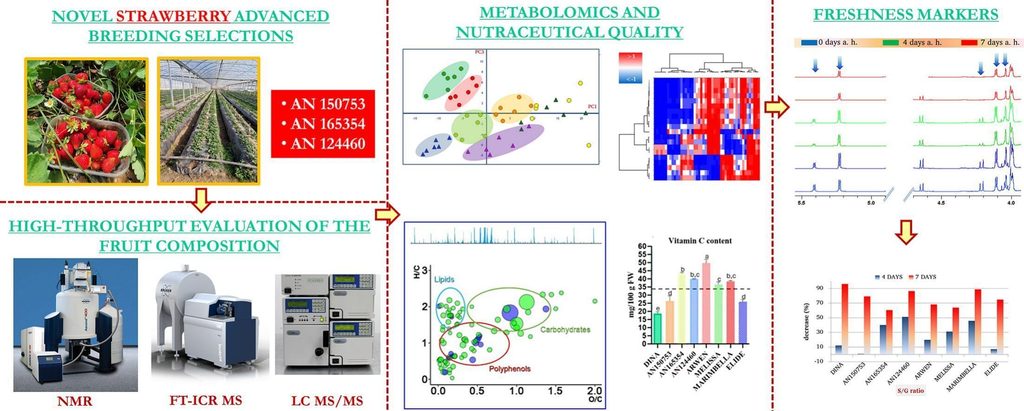
The adverse climatic conditions are causing increasing concern across the Mediterranean region, driving strawberry producers toward alternative and effective strategies, including the selection of new and resistant cultivars. In this work, three new strawberry selections, derived from intraspecific crossings, were compared with five commercial cultivars. The aim was to characterize these cultivars by using both traditional methods (pH, TA, DW, TPC, TAC, vitamin C and TEAC) and advanced analytical techniques, including high resolution liquid-state NMR and Mass Spectrometry (FT-ICR and LC-MS/MS). The latter techniques, associated to chemometrics, enabled the identification of a unique molecular profile for each cultivar, in terms of primary and secondary metaboloma. Moreover, an innovative NMR-based method was proposed to appreciate the strawberry freshness. Concluding, the new selection AN 165354 resulted as excellent alternative to the commercial strawberries under greenhouse, exhibiting high nutritional and nutraceutical quality (48 and 163.2 mg/100 g FW for Vitamin C and total phenols, respectively) and an enhanced resistance to the degradation when stored at 4 °C (S/F ratio lower than 67% 7 days after the harvest).
Full text available at: Food Chemistry 532 (2026) 151616
Enhancing leather tanning efficiency and sustainability with polyphenolic macrocycles: a biomimetic approach
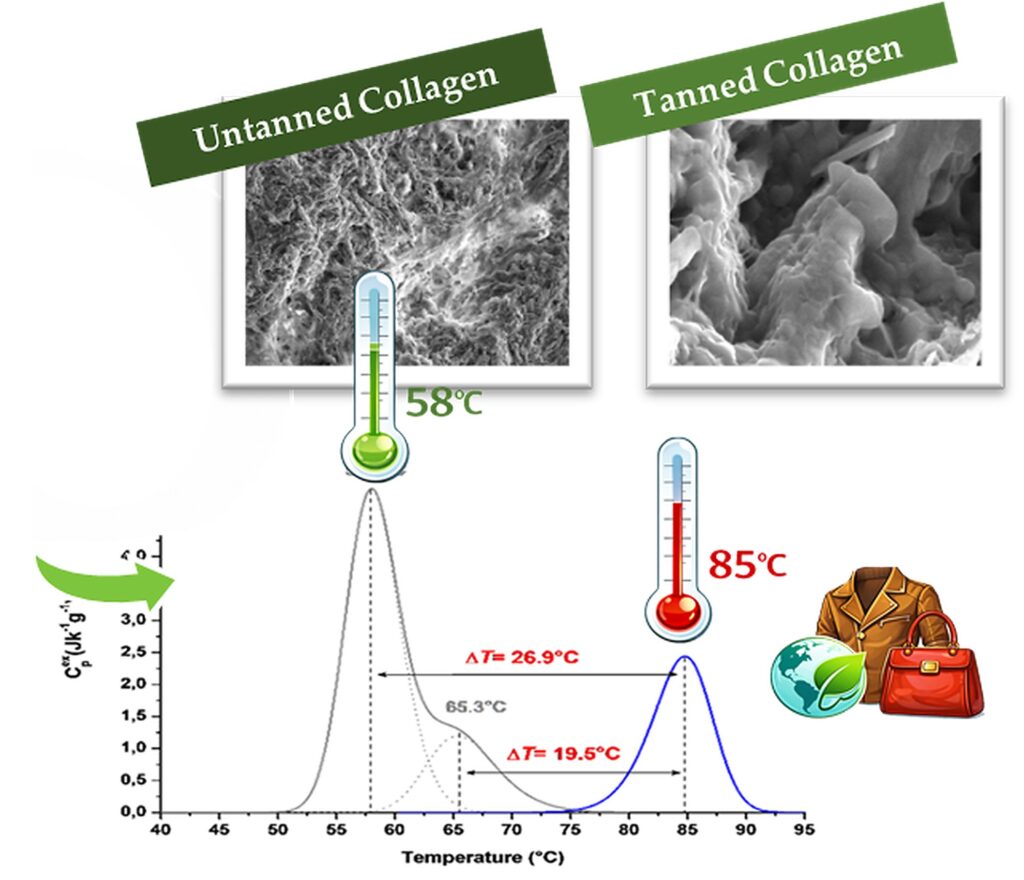
This study emphasizes that a biomimetic approach is effective in producing synthetic macrocyclic polyphenolic compounds that exhibit high leather tanning efficiencies and can be utilized for a more sustainable leather tanning process. Polyhydroxylated resorcinarene and pyrogallolarene macrocycles 1–8 were synthesized, featuring alcoholic and phenolic groups (hydroxyl-footed) on the CH bridges through a sustainable procedure that employs microwaves and minimizes solvent waste, resulting in short reaction times. Analytical techniques such as Micro-DSC, ATR-IR, and SEM confirmed that the phenol-catechol-footed macrocycles 3–8 demonstrate impressive tanning performance, with derivative 4 achieving a collagen denaturation temperature of 85 °C, which is notably higher than that of some vegetable tannins. The presence of numerous hydroxyl (OH) groups is essential for forming a dense network of hydrogen bonds, leading to stabilization effects that rival or surpass those of traditional vegetable tannins.
Full text available at: Scientific Reports 2026

Prism[5]arene Iminosugar Bioconjugates Are Potent Multivalent Inhibitors and Mutation Specific Pharmacological Chaperones of Glucocerebrosidase (GCase) Activity
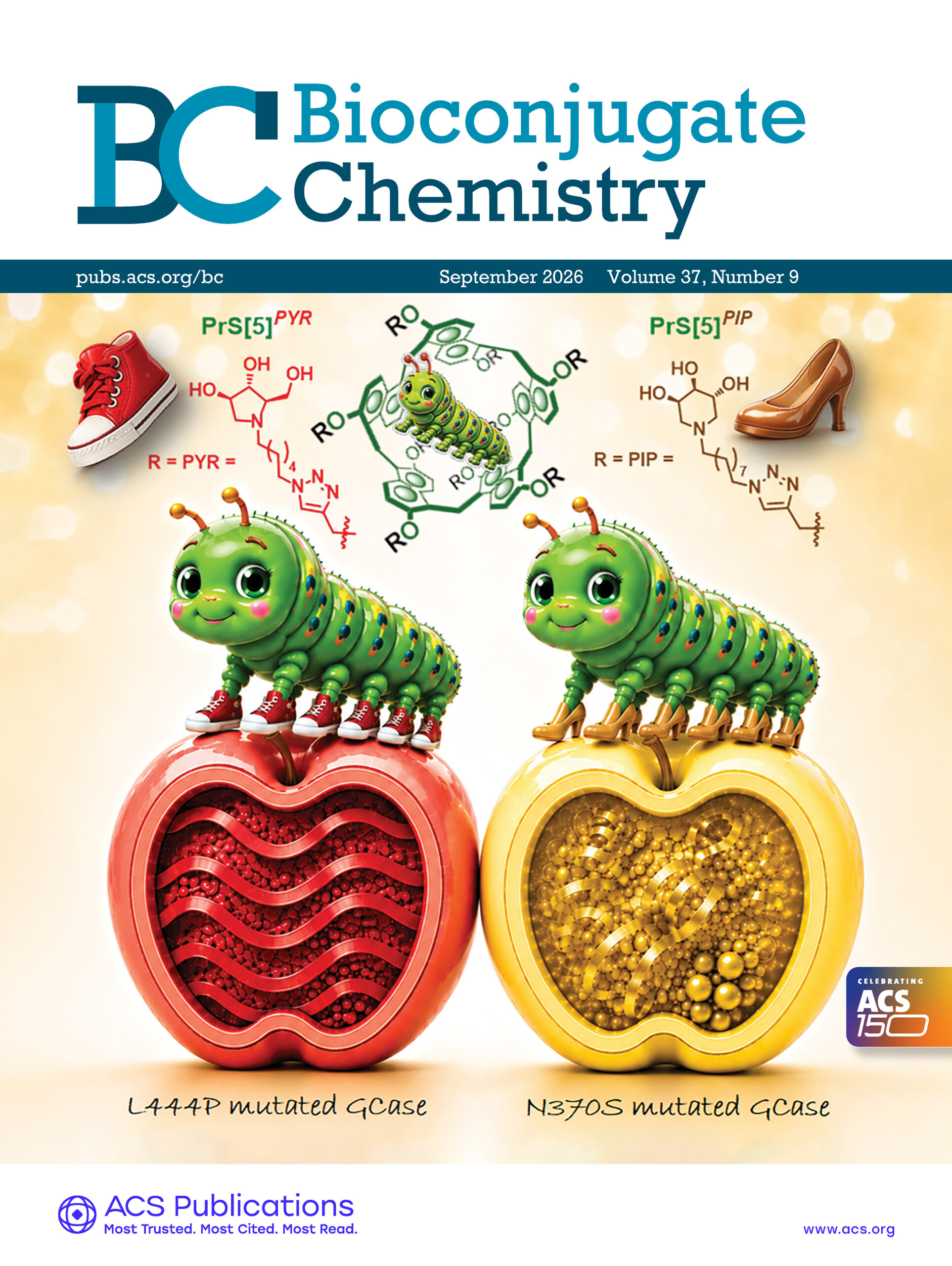
When trihydroxypiperidine (PIP) or DAB-1 pyrrolidine (PYR) iminosugars are multimerized on the prism[5]arene scaffold, they generate highly efficient multivalent inhibitors of GCase. Binding trihydroxypiperidine to the rims of prism[5]arene (PrS[5]PIP) results in a multivalent derivative that is more effective than others reported in the literature with the same bioactive unit. This efficacy is attributed to the role of prism[5]arene, whose barrel-like shape exposes an external π-surface that enables van der Waals contacts and other secondary interactions with the enzyme, thereby enhancing affinity for GCase through dimer stabilization. The high efficiency of PrS[5]PIP is supported by in silico calculations that showed how the crowding of the bioactive units on the rims of the macrocycle promotes a rearrangement allowing the active site to accommodate two trihydroxypiperidine units, which engage in hydrogen bonding with the catalytically active Glu residues. Due to their inhibitory potency, these prismarene derivatives have been tested as pharmacological chaperones in intact cell lines from Gaucher patients carrying different mutations. The results indicated that the PrS[5]PIP is more effective toward the N370S mutation, while the DAB-1 pyrrolidine iminosugar PrS[5]PYR unexpectedly enhances L444P mutant GCase activity. This suggests that the type of iminosugar linked to the prismarene scaffold influences GCase activity rescue in a mutation-dependent manner and opens the way for the future development of increasingly efficient pharmacological chaperones.
Full text available at: Bioconjugate Chem. 2026, 37, 1857–1866.

Exploring Calixarene-Based Pseudorotaxane Architectures: Threading Ammonium Axles With an Exo-Rim π-Functionalized Calix[6]Arene Macrocycle
In this study, we present the synthesis of a novel 1,4-π-functionalized calix[6]arene derivative 2, which features two electron-rich 1,2,3-trimethoxybenzene units on the exo rim and six methoxy groups on the endo rim. This design creates an extended and deep aromatic cavity, aimed at enhancing host–guest interactions with dialkylammonium axles. The results show that threading occurs even in the presence of bulky aromatic groups on the exo rim of 2, observed with a series of symmetric and directional ammonium salts. NMR studies confirmed the formation of pseudorotaxane complexes and revealed that exo-rim π-functionalization influences binding affinity and orientational selectivity, depending on the axle’s structure. Interestingly, the threading of 2 with the biphenyl axle 3c+ results in a pseudorotaxane stabilized by π···π interactions, which is 4.4 times more stable than the analog with hexamethoxy-calix[6]arene 1a that features tert-butyl groups on the exo rim. Comparison of the endo-p-NO2-benzyl/endo-alkyl stereoselectivity ratios observed with directional axle 3e+ and the two macrocycles 1a and 2, indicates that the extended cavity of 2 enhances and promotes C─H···π interactions between the axles’ alkyl chain and the enlarged aromatic cavity of 2. This finding is further supported by density functional theory (DFT) and noncovalent interaction (NCI) calculations. The results described here provide valuable insights for designing new wheels with extended and deep aromatic cavities.
Full text available at: Chemistry – A European Journal 2026, e71289

Novel macrocycles: from synthesis to supramolecular function
Five decades after the groundbreaking discovery of crown ethers, macrocyclic hosts remain vital to the field of supramolecular chemistry. The intrinsic cavity within these molecules renders them exceptional candidates for a wide array of supramolecular applications. These include catalysis, molecular and biomolecular recognition, chiral sensing, self-assembly, and the creation of complex interpenetrated architectures. Furthermore, their synthetic versatility positions macrocycles as invaluable building blocks in the self-assembly of supramolecular materials, which have demonstrated significant applications in environmental chemistry, catalysis, and sensing technologies.
This ongoing evolution in macrocycle chemistry is a testament to the ingenuity of scientists, who are constantly crafting innovative macrocyclic structures to enable increasingly sophisticated supramolecular functions and properties. There has been a surge in the discovery of new macrocycle classes, each finding diverse applications within the realm of supramolecular chemistry.
The aim of this Thematic Issue is to spotlight the most groundbreaking research on macrocyclic molecules and their supramolecular capabilities. Emphasis will be placed on the synthetic methodologies used to develop new hosts, alongside exploring the supramolecular properties and functions they support, such as catalysis, chiral sensing, the synthesis of mechanomolecules, and molecular and biomolecular recognition.
Full text available at: Beilstein J. Org. Chem. 2026, 22, 982–985

Sulfated prism[6]arene as a water-soluble host for molecular recognition of dye pollutants in aqueous environments
The contamination of urban groundwater by synthetic organic compounds represents a growing environmental concern; therefore, the development of supramolecular systems capable of selectively recognizing pollutants in aqueous environments is increasingly important, both for detection and remediation purposes. Herein, we report the synthesis of a water-soluble prism[6]arene extensively functionalized with sulfate groups at both rims. This host exhibits remarkable binding affinities toward organic dyes, specifically rhodamine B and methylene blue. The binding properties with these guests were investigated via UV–vis, fluorescence, NMR, DLS, DOSY, and ITC. Notably, in the presence of rhodamine B, the sulfated prism[6]arene forms both 1:1 endo-cavity and 1:2 capsular complexes, as evidenced by multi-technique characterization. Furthermore, in silico calculations suggest that two macrocycle units assemble into a water-bridged supramolecular capsule that encapsulates one molecule of rhodamine B. In contrast, methylene blue exclusively forms 1:1 endo-cavity complexes. These findings establish sulfated prism[6]arene as a promising water-soluble macrocycle paving the way for applications in environmental remediation.
Full text available at: Commun Chem 2026

A Fast and Convenient Synthesis of Heterocycle-Based Polymers via Infrared Irradiation-Assisted Direct C–H Bond Arylation Polymerization in Quasi-Solvent-Free Conditions
The first synthesis of π-conjugated polymers for organic solar cells (OSCs) via infrared (IR) irradiation-assisted Pd-catalyzed direct C–H bond arylation polymerization (DArP) is reported. Reactions have been carried out under air and nonanhydrous conditions, in the presence of a very small amount (only 3.0 equiv) of cyclopentyl methyl ether (CPME). Donor–acceptor (D-A) heteroaryl-based π-conjugated polymers having different structures have been obtained in short reaction time. A more detailed investigation has been carried out for the donor polymer PBDB-T: three batches, synthesized via IR irradiation-assisted DArP and, for two of them, subjected to end-capping reactions, were tested in organic solar cells (OSCs), achieving maximum power conversion efficiency (PCE) of 4.8% in non-optimized device, which is comparable to commercially available PBDB-T used as reference (5.9%). Our results confirm that the experimental advantages of DArP reactions combined with the use of IR irradiation and the quasi-solvent-free conditions represent a straightforward and sustainable route to heterocycle-based polymers for organic solar cells.
Full text available at: J. Am. Chem. Soc. 2026, 148, 6, 5953–5965

Indane synthesis in resorcinarene capsules: The crucial role of the carbocation counter anion
This study elucidates the pivotal role of hexameric capsule C in the Brønsted acid-catalyzed dimerization of styrenes to indanes. The confined environment significantly influences the reaction outcomes and requires the co-encapsulation of acid counter-anions for the effective stabilization of carbocation intermediates. These results indicate the potential to optimize the catalytic activity of hexameric capsule C through careful selection of suitable carbocation counter-anions.
Chin. Chem. Lett., 2025, 112261 – In Press

Carboxylato-prism[6]arene as a supramolecular catalyst in water: exploiting its deep hydrophobic cavity for green oxidation of aromatic amines
The carboxylato-prism[6]arene acts as an efficient catalyst for the oxidation of aromatic amines in water, utilizing hydrogen peroxide (H2O2) as a green oxidant. The findings indicate that forming supramolecular endo-cavity complexes between aniline derivatives and the prism[6]arene is essential for catalytic activity. Calorimetric investigations demonstrate that this complex formation is primarily driven by entropic factors associated with expulsing frustrated water molecules from the deep hydrophobic cavity of the prism[6]arene. In silico studies further confirm the presence of these water molecules within the cavity and their subsequent release upon the introduction of aromatic amines. Additionally, a computational approach was employed to elucidate the initial oxidation steps of aniline within the prism[6]arene cavity. This encapsulation process significantly lowers the activation free energy by 34.94 kJ mol−1, thereby enhancing reactivity through hydrogen bonding and solvent effects. The computational results closely align with experimental data, underscoring the critical role of host–guest interactions within the deep cavity of the prism[6]arene in facilitating the oxidation process.
Chem. Sci., 2025,16, 18223-18232

Hydrogen Production from Formic Acid Decomposition Promoted by Gold Nanoparticles Supported on a Porous Polymer Matrix
Formic acid (FA) is considered one of the most promising carriers of clean and safe dihydrogen. This study highlights the potential of using poly(2,6-dimethyl-1,4-phenylene oxide) (PPO) as a support for AuNPs to produce H2 through formic acid dehydrogenation (FAD). The developed synthesis method allows for precise control over the gold content by completely encapsulating AuNPs (4–6 nm) within the PPO matrix, ensuring a uniform distribution of nanoparticles with an active cubic morphology. In an aqueous solution (or a water/DMAc mixture), the catalyst exhibited high activity, generating H2 without producing CO, underscoring its high selectivity for dehydrogenation. At 105 °C, the catalyst showed a TOF of 360 molFA·molAu–1·h–1 and an activation energy of 39.3 ± 2.6 kJ·mol–1. By optimizing the formic acid concentration and gold loading, the system achieved an impressive TOF of 600 molFA·molAu–1·h–1, comparable to the best values reported in the literature. Notably, the AuNPs-PPO system facilitates the FAD reaction without requiring additional bases or modified supports. The reaction order of 0.81 ± 0.04 with respect to FA concentration indicates the rapid diffusion of the reagent within the polymer matrix without limiting its reactivity. Lastly, the AuNPs-PPO catalytic system has been demonstrated to be reusable.
Energy Fuels 2025, 39(29), 14320–14329

Introducing Prism[4]arene: A Macrocycle with Enantiomerically Resolvable Inherent Chirality and Intriguing Chiroptical Properties
This study presents the first report of an inherently chiral prismarene with resolved enantiomers. Prism[4]arenes, synthesized via a thermodynamic template approach using a tailor-made selective cation, effectively maintain their chirality due to their strained macrorings and narrow annuli, which prevent the flipping of naphthalene rings. The solid-state structure of the synthesized PrS[4]iPe revealed a racemic crystal composed of all-pR and all-pS enantiomeric pairs, forming supramolecular polymeric chains of homochiral molecules interlinked by intermolecular host–guest interactions. Both enantiomers were resolved by using chiral high-performance liquid chromatography (HPLC), and their chiroptical properties were thoroughly investigated. Configurational assignment was achieved through time-dependent density functional theory (TDDFT) computations alongside electronic circular dichroism/ultraviolet–visible (ECD/UV–vis) spectral analysis. Notably, the circularly polarized luminescence (CPL) properties exhibited a significant dissymmetry ratio of 0.008 for these prism[4]arenes, due to electric and magnetic dipole transition moments both directed along the cylinder axis. Furthermore, the ability of PrS[4]iPe to achieve enantioselective recognition with chiral ammonium guests was demonstrated.
J. Am. Chem. Soc. 2025, 147(24), 20843-20854

Biodegradable alginate derivatives obtained by eco-friendly ultrasound technology for more sustainable leather tanning
This study investigates ten biodegradable re-tanning agents derived from sodium alginate, utilizing various ultrasound technologies and varying key process parameters, including ultrasound frequency, intensity, and treatment duration, at a maintained temperature of 40 °C. The sodium alginate derivatives (SADs) were characterized through viscosimetric analysis, gel permeation chromatography (GPC), proton nuclear magnetic resonance (1H-NMR) spectroscopy, thermogravimetric analysis, and attenuated total reflectance Fourier-transform infrared (ATR-FTIR) spectroscopy. The findings demonstrate that ultrasound primarily facilitates the cleavage of 1–4 linkages within the polymer chains. The thermal stability of SAD-collagen matrices was influenced by the molecular weight and viscosity of the SADs, along with the intrinsic heterogeneity of the collagen matrix. Subsequently, the most effective SAD for the re-tanning process was evaluated at a pilot scale. The leather produced underwent comprehensive characterization through physical–chemical methods (micro-differential scanning calorimetry, unilateral NMR, ATR-FTIR) and standard tests. Notably, the selected SAD fully replaced existing commercial products, such as acrylic resins and synthetic re-tanning agents, resulting in white leather with a natural softness that maintains the technical performance characteristics, such as tear strength, surface durability, grain distention, and colour fastness, required for high-end footwear and leather goods. Additionally, this approach offers enhanced advantages for both human health and the ecosystem by eliminating the need for dyeing processes.
Green Chem., 2025, 27, 10567

Green synthesis of gold nanoparticles from pomegranate juice ascertained by a combined approach based on MALDI FT-ICR MS and LC-ESI-MS/MS
This research employs advanced analytical techniques to explore the specific roles of Pomegranate Juice (PJ) phytochemicals in both the reduction and stabilization of gold nanoparticles (AuNPs) obtained by means of juice from wasted fruits. A level 3 for classes annotation, used for MALDI FT ICR-MS data, was useful to provide an immediate visualization of the main involved metabolites in AuNPs synthesis, through van Krevelen diagrams. More than 25 elemental formulae containing at least one Au atom were assigned to AuNPs sample, confirming the formation of organogold complexes. LC-MS/MS analysis allowed a level 2 annotation of polyphenols and carbohydrates involved in metal reduction and AuNPs surface coating. This work highlights the potential of PJ in green nanoparticles synthesis, providing insights into the bioactive compounds responsible for the tunable characteristics of AuNPs.
Food Chemistry 2025, 476, 143427

Deep-Cavity Calix [4] naphth [4] arene Macrocycles: Synthesis, Conformational Features, and Solid-State Structures
We recently introduced calix[n]naphth[m]arenes as a novel class of deep-cavity hybrid macrocycles constituted by phenol (n) and naphthalene (m) units. In this study, we report the synthesis, conformational analysis, spectroscopic properties, and solid-state structures of calix[4]naphth[4]arene (C4N4) and its permethylated analog (C4N4-Me), thereby expanding the calix[n]naphth[m]arene family. C4N4 was synthesized through a 2 + 2 fragment coupling macrocyclization under acidic conditions, where the solvent played a crucial role in selectively forming the C4N4 derivative. The X-ray structure of C4N4 reveals a chair-like 1,2,3,4-alternate conformation characterized by two opposing 3/4-cone moieties stabilized by intramolecular hydrogen bonds. In contrast, the X-ray structure of C4N4-Me exhibits a 1,3,5,7-alternate conformation.
Molecules 2024, 29(17), 4142

Thermodynamically Templated Macrocyclizations: Enhancing the Synthesis of Prism [5] arenes with Tailor-Made Guests
The macrocyclization of 2,6-dialkoxynaphthalene monomers to prism[5]arenes is thermodynamically templated by DABCO cations. In this study, we demonstrate that a greater template affinity for prism[5]arene improves the macrocyclization yield. By using novel templating cations, the yield of alkoxy-prism[5]arenes increases significantly compared with those of previously reported procedures, while the purification process becomes easier and faster.
Org. Lett. 2024, 26, 39, 8228–8232

Under the Influence of Water: Molecular Recognition of Organic Hydrophilic Molecules in Water with a Prismarene Host Driven by Hydration Effects
A water-soluble prism[5]arene host can form endo-cavity complexes with hydrophilic organic substances in water by displacing frustrated water molecules from its deep cavity. Water molecules structured at both rims of the prismarene host can mediate hydrogen bonding interactions with the guest. Water-mediated hydrogen bonding interactions were invoked here to elucidate the elevated binding affinities and selectivity of the prismarene host toward hydrophilic organic guests. We show that water at the interface of a host-guest complex can act as an extension of the host structure, facilitating the accommodation of neutral guests within the binding site. This study highlights the crucial role of water in facilitating supramolecular interactions between a deep-cavity prismarene host and organic hydrophilic guests in aqueous medium.
Chem. Eur. J. 2024, 30(44), e202401734

Chirality Sensing of Cryptochiral Guests with Prism[n]arenes
Optical chirality sensing has gained significant attention in recent years. Within this field, the quest for stereodynamic chiroptical probes capable of detecting cryptochiral guests presents a formidable challenge. Macrocycles exhibiting planar chirality have emerged as promising candidates for amplifying the chirality of cryptochiral guests. In this study, we demonstrate that the formation of host-guest complexes between cryptochiral molecules and planar chiral prismarenes triggers electronic circular dichroism (ECD) signals via host-guest complexation-induced chirality amplification. The absolute configuration of the most stable chiral macrocyclic host-guest complex has been established by resorting to both exciton model and DFT computations. Furthermore, we demonstrated that this supramolecular chirality sensing system can be employed to determine the enantiomeric composition of scalemic mixtures by measuring the ECD bands intensity. The information described here opens the way for the use of prismarenes as stereodynamic probes for sensing of cryptochiral guests.
Chem. Eur. J. 2024, 30(40), e202401625

The Resorcinarene Hexameric Capsule as a Supramolecular Photoacid to Trigger Olefin Hydroarylation in Confined Space
The self-assembled resorcinarene capsule C6 shows remarkable photoacidity upon light irradiation, which is here exploited to catalyze olefin hydroarylation reactions in confined space. An experimental pKa* value range of −3.3–−2.8 was estimated for the photo-excited hexameric capsule C6, and consequently an increase in acidity of 8.8 log units was observed with respect to its ground state (pKa=5.5–6.0). This makes the hexameric capsule the first example of a self-assembled supramolecular photoacid. The photoacid C6 can catalyze hydroarylation reaction of olefins with aromatic substrates inside its cavity, while no reaction occurred between them in the absence of irradiation and/or capsule. DFT calculations corroborated a mechanism in which the photoacidity of C6* plays a crucial role in the protonation step of the aromatic substrate. A further proton transfer to olefin with a concomitant C−C bond formation and a final deprotonation step lead to product releasing.
Chem. Eur. J. 2024, 30(22), e202303678

Novel octacationic-resorcin[4]arenes featuring quaternary ammonium groups as multivalent biocides
Novel resorcin[4]arene-based octacationic quaternary ammonium compounds (ResQACR) were obtained by linking tetraalkylammonium groups on the macrocycle wider rim to give multivalent multi-QACs. Their structures were elucidated through 1D and 2D NMR experiments, HR-MS analysis, and crystallographic studies. Additionally, the conformational dynamics of these octacationic-resorcinarenes were investigated using 1H variable-temperature (VT) NMR experiments. The antimicrobial properties of ResQACR derivatives were studied by in vitro biological investigations. We identified that the ResQACbutyl derivative shows an impressive bacteriostatic activity against S. aureus. A remarkable multivalent effect was observed for this bacteriostatic activity. Interestingly, cytotoxic studies indicate that ResQACbutyl showed no adverse impact on cell viability of a human cell line, even at concentrations 30 times greater than the MIC for S. aureus and approximately 3 times higher than the MIC for E. coli. ResQACundecyl exhibits greater bacteriostatic activity against E. coli than against S. aureus, but it is cytotoxic at lower concentrations (IC50 of 12.1 μM) than its MIC. ResQACphenyl shows scarce bacteriostatic activity against both S. aureus and E. coli, while no multivalent effect was observed. This is likely attributed to the conformational rigidity of the boat C2v conformation of ResQACphenyl, which hinders optimal matching between the cationic chains and the negatively charged bacterial surface.
Org. Chem. Front. 2024, 11(15), 4101–4108

Synthesis, conformational properties, and molecular recognition abilities of novel prism[5]arenes with branched and bulky alkyl groups
The direct macrocyclization to prism[5]arenes of 2,6-dialkoxynaphthalenes with branched and bulky alkyl groups has been obtained in good yields in the presence of 1,4-dihexyl-DABCO template. These novel prism[5]arenes exhibit typical D5-symmetry and DFT calculations indicate that the homochiral all-pS (all-pR) conformation is the most stable of all the possible conformations. Prism[5]arenes crystallize as racemic mixtures (all-pS/all-pR) in centrosymmetric space groups. The eight crystal structures show C2 point symmetry of the macrorings, with a larger opening of the cavity observed for PrS[5]iBu, PrS[5]MeCy and the β-form of PrS[5]PrCy. The dynamic stereochemical inversion (from pR to pS and vice versa) of prism[5]arenes was examined by 1H VT NMR experiments. The racemization of prism[5]arene derivatives occurs by through the-annulus-rotation of the naphthalene units. With increasing length of linear alkyl substituents from C2 to C9, the chains tend to pack at both rims, thereby diminishing the conformational freedom of the naphthalene units. The presence of branched alkyl groups at both rims of the prism[5]arenes increases the energy barrier to racemization and consequently lowers the rate of the racemization process. Prism[5]arenes bearing branched or bulky alkyl groups at both rims can form endo-cavity complexes with 1,4-dihexyl-DABCO 22+ and piperazonium 32+ guests. Two hosts with branched alkyl groups, PrS[5]iPr and PrS[5]iBu, show guest binding affinities higher than those calculated for the analogous linear PrS[5]nPr and PrS[5]nBu prism[5]arenes. This result can be justified on the basis of the greater conformational rigidity and preorganization of prism[5]arenes bearing branched groups.
Org. Chem. Front. 2024, 11, 2710-2719

Side-chain Poly[2]pseudorotaxanes containing β-cyclodextrin for more sustainable tanning process
Sustainability of leather lies in how the hide, a sustainable, naturally renewable, raw material, is processed. Tanning chemistry has been a limiting factor for leather sustainability. In this study, a host-guest synthesis strategy was selected to modify one of the most widely used tanning polymer, MIDA DD, and obtain a new hybrid tanning system containing β-cyclodextrin, and leather drastically less impactful on the earth and people. Poly[2]pseudorotaxane Side-Chain Complexes (PSCCs) have been obtained by threading β-cyclodextrin units onto the side-chains of the commercial MIDA DD. The formation of PSCCs in aqueous solution was investigated by using 1D NMR, ATR-FTIR and TGA experiments. The ability of PSCCs to stabilize the collagen matrix was tested at laboratory and industrial pilot scale by micro-DSC, ATR-FTIR and solid-state NMR techniques. The physical and mechanical performance of the obtained crust leather was determined by standard tests used in tanning industry. Side-chain poly[2]pseudorotaxanes showed better tanning performances than the fossil-based MIDA DD, the most effective supramolecular tannins being obtained by mixing β-CD and MIDA DD in ratios close to 1/1 (w/w). The new tanning mixtures allow for significantly reducing both the amount of fossil-based MIDA-DD polymer in the current tanning processes (by 45%) and the free bisphenol content in leather crust (by more than 80%) due to the presence of bio-based β-CD in the composition of the new supramolecular tanning agents. The findings disclosed here pave the way for the CDs’ employment in improving the sustainability of tanning processes.
Polymer Testing 2023, 129, 108268

Insights into the Self-Filling Effects of Branched Isopropyl Groups on the Conformational and Supramolecular Properties of Isopropoxyprism[6]arene
In this work, the direct macrocyclization of a prism[6]arene macrocycle bearing branched alkyl chains on the rims is reported. Isopropoxyprism[6]arene adopts in solution and in the solid state a cuboid D2-conformation in which four isopropyl groups are folded inside the cavity, to give C−H⋅⋅⋅π interactions and filling the internal void. The conformational features of isopropoxyprism[6]arene have been studied by dynamic 1H NMR experiments. The presence of branched isopropyl chains on the prism[6]arene rims, stabilizes the cuboid D2-conformation to a greater extent than ethyl or propyl groups in PrS[6]Et and PrS[6]nPr. The higher resistance of PrS[6]iPr to open its cuboid D2 conformation, with respect to PrS[6]Et and PrS[6]nPr, also affected its binding abilities. In fact, alkylammonium-based endo-cavity complexes of PrS[6]iPr show lower binding constant values than the analogous propoxy/ethoxy-prism[6]arene complexes.
Eur. J. Org. Chem. 2023, 26(39), e202300608

Insights into the Friedel–Crafts Benzoylation of N-Methylpyrrole inside the Confined Space of the Self-Assembled Resorcinarene Capsule
Friedel–Crafts benzoylation of N-methylpyrrole 2 can run inside the confined space of the hexameric resorcinarene capsule C. The bridged water molecules at the corner of C act as H-bonding donor groups to polarize the C–Cl bond of benzoyl chlorides 3a–f. Confinement effects on the regiochemistry of the FC benzoylation of N-methylpyrrole are observed. The nature of the para-substituents of 3a–f and their ability to establish H-bonds with the water molecules of C work synergistically with the steric constrictions imposed by the capsule to drive the regiochemistry of products 4a–f. QM investigations indicate that inside the cavity of C, the FC benzoylation of 2 has a bimolecular concerted SN2 mechanism, appropriately, above-plane nucleophilic vinylic substitution (SNVπ)─supported by H-bonding interactions between water molecules and both the leaving Cl atom and the carbonyl group.
Org. Lett. 2023, 25, 35, 6464–6468

Hexahexyloxycalix[6]arene, a Conformationally Adaptive Host for the Complexation of Linear and Branched Alkylammonium Guests
Hexahexyloxycalix[6]arene 2b leads to the endo-cavity complexation of linear and branched alkylammonium guests showing a conformational adaptive behavior in CDCl3 solution. Linear n-pentylammonium guest 6a+ induces the cone conformation of 2b at the expense of the 1,2,3-alternate, which is the most abundant conformer of 2b in the absence of a guest. In a different way, branched alkylammonium guests, such as tert-butylammonium 6b+ and isopropylammonium 6c+, select the 1,2,3-alternate as the favored 2b conformation (6b+/6c+⊂2b1,2,3-alt), but other complexes in which 2b adopts different conformations, namely, 6b+/6c+⊂2bcone, 6b+/6c+⊂2bpaco, and 6b+/6c+⊂2b1,2-alt, have also been revealed. Binding constant values determined via NMR experiments indicated that the 1,2,3-alternate was the best-fitting 2b conformation for the complexation of branched alkylammonium guests, followed by cone > paco > 1,2-alt. Our NCI and NBO calculations suggest that the H-bonding interactions (+N–H···O) between the ammonium group of the guest and the oxygen atoms of calixarene 2b are the main determinants of the stability order of the four complexes. These interactions are weakened by increasing the guest steric encumbrance, thus leading to a lower binding affinity. Two stabilizing H-bonds are possible with the 1,2,3-alt- and cone-2b conformations, whereas only one H-bond is possible with the other paco- and 1,2-alt-2b stereoisomers.
Molecules 2023, 28(12), 4749

Confused-Prism[5]arene: a Conformationally Adaptive Host by Stereoselective Opening of the 1,4-Bridged Naphthalene Flap
The confused-prism[5]arene macrocycle (c-PrS[5]Me) shows conformational adaptive behavior in the presence of ammonium guests. Upon guest inclusion, the 1,4-bridged naphthalene flap reverses its planar chirality from pS to pR (with reference to the pS(pR)4 enantiomer). Stereoselective directional threading is also observed in the presence of directional axles, in which up/down stereoisomers of homochiral (pR)5-c-PrS[5]Me pseudorotaxanes are formed.
Chem. Eur. J. 2023, 29(6), e202203030

Supramolecular control on reactivity and selectivity inside the confined space of H-bonded hexameric capsules
The confinement of substrates inside the cavity of self-assembled capsules makes it possible to effectively catalyze organic reactions in a way that is analogous to how enzymes work in biological systems. Due to steric constraints, solvent exclusion, intermediates stabilization, and conformational control of substrates, chemical reactions taking place in a confined space may exhibit unique processes. As a result, the fundamental rules of organic reactivity are frequently broken. The hexameric capsule CR, an intriguing supramolecular assembly formed by six resorcinarene 1 macrocycles and eight water molecules, is the subject of this review. This assembly has proven to be effective at catalyzing several chemical reactions by controlling reactivity and selectivity in its confined space.
Curr. Opin. Colloid Interface Sci. 2023, 65, 101692
work in progress
in progress…

Multivalent resorcinarene clusters decorated with DAB-1 inhitopes: Targeting Golgi α-mannosidase from: Drosophila melanogaster
The synthesis of multivalent ligands able to selectively bind enzymes has produced a multitude of new glycomimetics anchored to different macrocyclic scaffolds. However, in this scenario, the studies focused on therapeutically relevant enzymes are still scarce. Resorcinarenes offer the opportunity to attach several bioactive functions to different positions, thereby accessing different topologies of the multivalent constructs. In this work, multimerization of the pyrrolidine iminosugar DAB-1 onto resorcinarene scaffolds has been addressed. The synthesized new architectures show a remarkable multivalent effect towards GMIIb, the recombinant Drosophila homolog of the tumor over-expressed human Golgi α-mannosidase II, over other α-mannosidases. Computational studies shed light on the origin of their multivalent effect as well as on their relative inhibitory potency.
Org. Chem. Front., 2021,8, 6648-6656
in progress…

Prismarenes: A New Class of Macrocyclic Hosts Obtained by Templation in a Thermodynamically Controlled Synthesis
The novel title macrocycles, based on methylene-bridged 1,5-naphthalene units, have been obtained by template effect in a thermodynamically controlled synthesis. In detail, the prism[5]arene 1 or the prism[6]arene 3 was selectively removed from the equilibrium mixture by using the complementary ammonium-templating agent. When only the solvent 1,2-DCE was used, the 1,4-confused derivative 2 was obtained. The prism[5]arene here described shows a deep π-electron-rich aromatic cavity that exhibits a great affinity for the quaternary ammonium guests, originating from favorable cation···π and +NC–H···π interactions. This recognition motif is the basis of the templated synthesis of the prism[n]arenes here reported.
J. Am. Chem. Soc. 2020, 142, 4, 1752-1756